
Is Beast Games Scripted or Real? How the Show Stays Fair (and Where It Doesn’t)

Beast Games is not scripted in the way viewers usually mean it: there is no credible evidence that winners are chosen in advance, that players read lines, or that challenge results are faked. MrBeast himself has publicly labeled the show “unscripted.” In a January 4, 2025 post, he called it the “#1 unscripted series launch in Prime Video history,” as reported by ComingSoon.
But “unscripted” is not the same as “untouched.” Beast Games is one of the most heavily produced reality shows ever made, and production shapes almost everything you see except the outcomes themselves. Sorting out which parts are real and which parts are engineered is the whole answer to this question. So let’s do it properly.
What “Scripted” Would Actually Mean
A scripted competition would mean the story is written before it is filmed: this player wins, that player turns villain in episode six, the underdog falls at the final hurdle. For that to work on Beast Games, hundreds of contestants, crew members, and a streamer spending a reported $100 million would all have to keep the same secret, while real prize money, real records, and real lawyers move around in public view.
Nothing like that has surfaced. No contestant (not even the ones suing the production) has claimed the results were rigged or that they were handed lines. That silence matters, because plenty of former players have criticized the show loudly and publicly about other things. People who felt mistreated had every reason to expose a fake competition if they had seen one. They described chaos, pressure and poor conditions. They did not describe a script.
Scripted vs Produced vs Edited: The Only Comparison That Matters
Most “is it fake?” arguments collapse because they treat three different things as one. They are not one.
| Element | Scripted? | How it actually works on Beast Games |
|---|---|---|
| Dialogue | No | Players speak for themselves; cameras capture far more conversation than the edit can use |
| Who wins each challenge | No evidence of fixing | Games are played live on set, and results drive real payouts: Season 2’s winner took home a verified $5,105,000 total |
| The challenges themselves | Designed, not scripted | Production builds the games, sets the rules and picks the order. That is format design, the same as any game show |
| Twists and bribes | Engineered | Offers are timed for maximum pressure on purpose; whether a player accepts is their own decision, which is why some refuse life-changing money |
| Casting | Engineered | 200 players in Season 2 were split into “Strong” vs “Smart” teams by design, casting builds clashes in before filming starts |
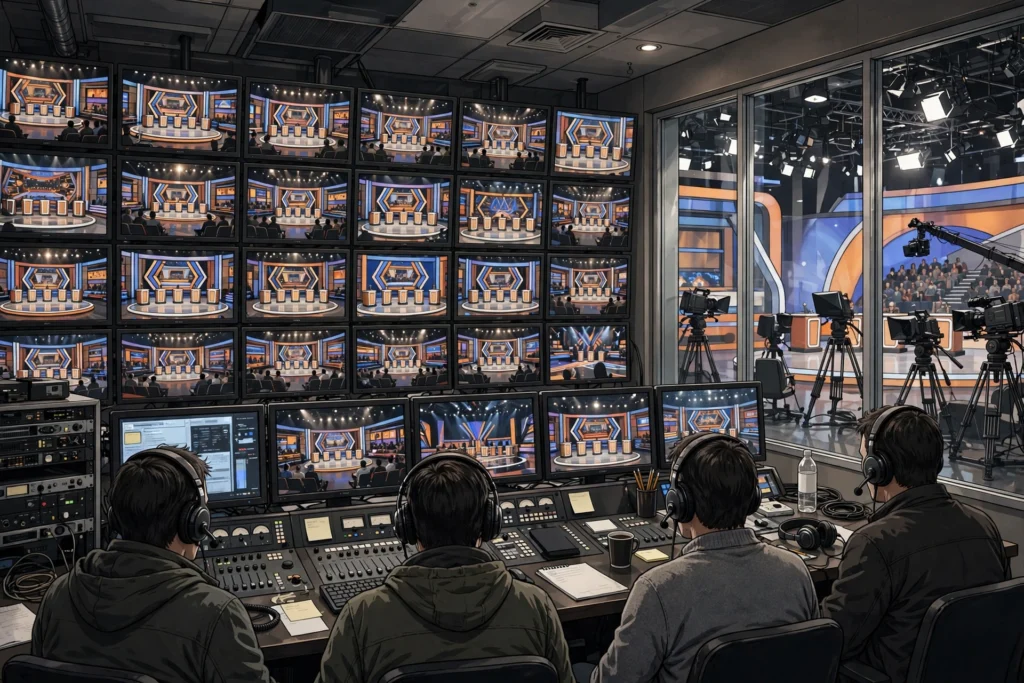
| The edit | Heavily shaped | Ten episodes are cut from a continuous shoot with up to 1,000 players; the show follows a small cast of stories and the rest become background |
| Episode endings | Produced | Filming runs continuously, but episodes are cut at cliffhanger points chosen afterward: Season 2’s episode 7 ended mid-decision, with the result held for episode 8 |
The middle column is where the honest answer lives. The outcomes are real. Almost everything surrounding the outcomes is constructed.
The Evidence That the Competition Is Real
The money is real, documented, and publicly accounted for. Season 1’s winner, Jeffrey Allen, won $10 million after a coin flip doubled the prize, a twist MrBeast has said cost him tens of millions of dollars out of pocket across the show. Season 2’s Tyler Lucas won $5,105,000, with full finale standings published by multiple outlets, down to the runner-up’s $22,133. Scripted entertainment does not need to wire eight figures to a warehouse worker from Ohio; a real competition does, and the paper trail is public.
The show set genuine world records. Season 1 broke 44 Guinness World Records, including the largest prize fund ever awarded on a competitive reality show ($10 million) and the most prize money ever turned down on one ($1 million). Records of that kind exist because the stakes were actually on the table.
Contestants sued the production over real conditions. In September 2024, five Season 1 contestants filed a class-action lawsuit alleging mistreatment, inadequate food and medical care, and unpaid wages, following a New York Times investigation in which more than a dozen players described injuries and long stretches between meals. We cover the claims and the production’s response in our Beast Games lawsuit explainer. Whatever you think of the allegations, they are not something a fully controlled, scripted production produces. Scripted shows control their sets. This set, by the contestants’ account, spun out of control, and MrBeast’s response was that the claims were “blown out of proportion,” not that the whole thing was pretend.
The cast behaves like people who can actually lose. Players have torched alliances for cash, refused bribes worth more than a house, and (in Season 2’s Bury Me Alive test) taken a bigger share of a shared $1 million than they had agreed with teammates, then said in interviews afterward that they regretted it. Regret, backlash and burned friendships are hard to fake at scale, and even harder to keep consistent across podcasts, AMAs and social media for months.
Where Beast Games Is Least “Real”
Honesty cuts both ways. Four parts of the show are manufactured, and viewers are right to notice them:
- Casting is destiny-shaping. Producers choose who plays, group them (Strong vs Smart in Season 2), and know exactly which personalities will collide. The game is real; the cast list is a loaded deck of characters.
- Production controls the environment. Sleep, food, information and downtime all run through the production, and the behind-the-scenes rules contestants live under shape behavior as surely as any script could, without writing a single line.
- Twists are timed, not random. Bribes arrive when a player is weakest. A coin flip doubles the grand prize at the exact moment of maximum drama in Season 1’s finale. The offers are real money with real consequences, but the timing is television engineering.
- The edit decides what “happened.” With up to 1,000 players and ten episodes, your favorite player’s arc is one of a handful chosen from thousands of hours. Villains and heroes are real people, but the version of them you meet has been selected, compressed, and sequenced for you.
None of that predetermines a winner. It predetermines how the winner’s story will feel.
Why It Feels Scripted Anyway
The suspicion is understandable. Reality TV trained viewers for two decades to assume manipulation, and Beast Games amplifies the genre’s every habit: cliffhanger cuts, confessionals that explain feelings on cue, a host who narrates like a ringmaster, and twists so dramatic they look planned, because the opportunities were planned, even if the choices weren’t.
There is also the scale problem. A YouTuber giving away $5 million reads as a stunt, so the brain files it as a stunt. Yet the documented facts point the other way: the show became Prime Video’s most-watched unscripted series ever, with more than 50 million viewers in its first 25 days, according to TheWrap, and it did that with a format Amazon itself markets as unscripted, in a genre where a proven fix would be a franchise-ending scandal for everyone involved, as the money trail we trace in how Beast Games contestants get paid makes clear.
Key Takeaways
- No credible evidence exists that Beast Games results are scripted, rigged or predetermined: no contestant, including those suing the show, has claimed that.
- MrBeast and Amazon market the series as unscripted, and it became Prime Video’s most-watched unscripted show ever (50M+ viewers in 25 days).
- The show is heavily produced: casting, environment, twist timing and the edit are all engineered. Outcomes are not.
- The strongest proof of reality is the public record: verified prize payouts, 44 Guinness World Records, and a real lawsuit over real on-set conditions.
- When the show “feels scripted,” you are almost always reacting to editing and engineered pressure, not fake results.
Frequently Asked Questions
Is the Beast Games winner decided in advance?
There is no evidence of that. Season 2’s winner, Tyler Lucas, won a documented $5,105,000 through the final briefcase game against runner-up Cory Sims, and full payout standings for the season were published by multiple outlets. A predetermined winner would require hundreds of people (including contestants who later sued the production) to keep the secret, and none has ever claimed it.
Do Beast Games contestants follow a script or read lines?
No script for dialogue has ever been reported by any contestant. Players give interviews and confessionals in their own words. What production controls is the environment (the rules, schedule, twists and edit), not what comes out of a player’s mouth.
Is Beast Games real or fake?
Both halves of the honest answer matter: the competition is real (real players, real eliminations, real money), and the presentation is manufactured, like all reality TV. Challenges are designed, twists are timed for drama, and ten episodes are edited down from a continuous shoot involving up to 1,000 people.
Why do people think Beast Games is scripted?
Mostly because of the edit. Cliffhanger episode endings, a small group of players getting full story arcs out of hundreds, and twists that arrive at the most dramatic possible moment all feel written. They are produced, which is different: the stage is built, but what players do on it decides who goes home, as the Season 2 results show in detail.



One Comment
Comments are closed.