Where Is Survivor Filmed? Fiji’s Mamanuca Islands Explained

If you are asking where is survivor filmed, the quick answer is Fiji. Since Season 33, which aired in 2016, the American version of Survivor has filmed in the Mamanuca Islands, a volcanic island group in Fiji in the South Pacific. It is not one single beach. Production uses different beaches and island sections across the archipelago for tribe camps, challenges, and Tribal Council, while keeping its main base in the same area season after season. This guide explains the current survivor filming location, how the Fiji base works, past locations, and why production stopped traveling the world.
The current Survivor filming location: the Mamanuca Islands
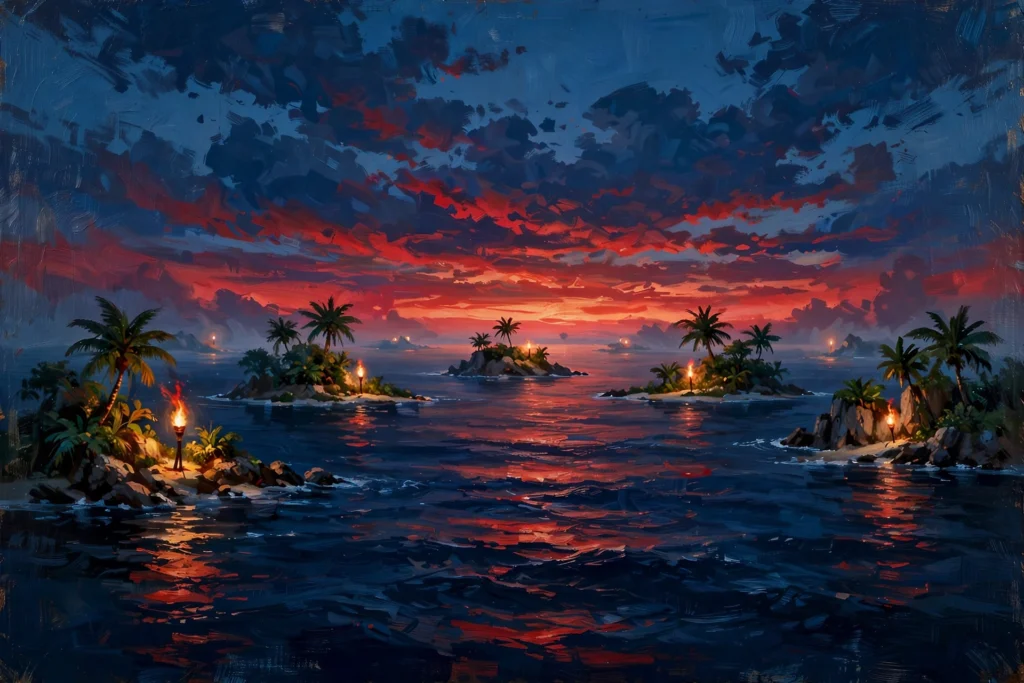
The Mamanuca Islands lie west of Nadi, Fiji, and south of the Yasawa Islands. They are a group of about 20 volcanic islands, surrounded by reef filled waters, white sand beaches, and clear tropical sea. For viewers, that is the classic Survivor look: open ocean for swimming and boat based challenges, jungle for camp life and hidden advantages, and beaches that can be rebuilt as a new camp each season.
Be precise about the survivor island location: the show does not name one public island as its permanent camp, and exact camp and challenge sites are not open to visitors. What is public and consistent is the wider area, the Mamanuca Islands, used continuously since Season 33.
Filming usually happens back to back. Since Season 19, two seasons have generally filmed back to back in the same location and aired in the same broadcast year. In Fiji, crews can film one season and then move straight into the next without packing up the whole operation and starting again in another country.
For the latest season, see the Survivor 51 Hub, which tracks the current season separately from this filming guide.
How the Fiji production base works
The Fiji setup is best understood as a semi permanent base, not a single set left standing all year. Each season, tribe camps are rebuilt, challenge courses are redesigned, and production areas are reset for a new cast. What stays in place is local knowledge, the supplier network, transport routes, safety planning, and the working relationship with landowners and government bodies.
Reporting on the production base points to Mana Island as the crew base area, with the Mana Island Resort previously described as the place where crew stay during production. In a CBS News visit reported ahead of Season 48, host Jeff Probst said about 400 employees work and stay on the Mamanuca Islands months ahead of production, and about 400 Fijians work on the show, bringing the total workforce to about 1,000 when California based staff are included. That scale explains why moving the show is such a large job: housing, boats, medical cover, challenge construction, food, transport, and security, repeated twice a year.
In the new era format, seasons now run 26 days, shorter than the original 39 day seasons. That game still needs a large outdoor production machine, but it runs more predictably when the location, weather, tides, and terrain are already familiar.
Survivor filming locations before Fiji
Before Fiji became the permanent home, changing location was part of the show itself. Early season subtitles often were the location: Borneo, The Australian Outback, Africa, Marquesas, Thailand, The Amazon, and Pearl Islands. That variety gave viewers a new landscape every season, but it also meant new scouting, permits, hiring, transport, and builds every time.
Here are the main survivor filming locations from the traveling years:
- Season 1, Borneo: Pulau Tiga, Sabah, Malaysia, filmed in spring 2000.
- Season 2, The Australian Outback: Herbert River, Goshen Station, Queensland, Australia.
- Season 3, Africa: Shaba National Reserve, Kenya.
- Season 4, Marquesas: Nuku Hiva, Marquesas Islands, French Polynesia.
- Season 5, Thailand: Ko Tarutao, Satun Province, Thailand.
- Season 6, The Amazon: Rio Negro, Amazonas, Brazil.
- Seasons 7, 8, and 12, Panama: Pearl Islands, Panama.
- Season 9, Vanuatu: Efate, Shefa Province, Vanuatu.
- Seasons 10 and 16, Palau: Koror, Palau.
- Season 11, Guatemala: Yaxha Nakum Naranjo National Park, Peten, Guatemala.
- Season 13, Cook Islands: Aitutaki, Cook Islands.
- Season 14, Fiji (first visit): Macuata, Vanua Levu, Fiji. This was a different part of Fiji from the later Mamanuca Islands base.
- Season 15, China: Mount Lu West Sea, Jiujiang, China.
- Season 17, Gabon: Wonga Wongue Presidential Reserve, Estuaire, Gabon.
- Season 18, Brazil: Jalapao, Tocantins, Brazil.
- Seasons 19, 20, 23, and 24, Samoa: Upolu, Samoa.
- Seasons 21, 22, 29, and 30, Nicaragua: San Juan del Sur, Nicaragua.
- Seasons 25, 26, 27, and 28, Philippines: Caramoan, Camarines Sur, for Seasons 25 and 26, and Palaui Island, Cagayan, for Seasons 27 and 28.
- Seasons 31 and 32, Cambodia: Koh Rong, Cambodia.
The pattern changed gradually. Later, production reused a location for two seasons filmed back to back, as it did in Samoa, Nicaragua, and the Philippines. Fiji took that logic further: instead of returning for one filming cycle, production stayed.
Past locations versus the Fiji era
| Era | Approach | What it meant for production |
|---|---|---|
| Seasons 1 to 18 | A new country almost every season | Maximum variety, but a full rebuild and new logistics each time |
| Seasons 19 to 32 | Back to back pairs in one location | Lower cost than a fresh move, with Samoa, Nicaragua, the Philippines, and Cambodia hosting multiple seasons |
| Seasons 33 to present | One permanent base in Fiji | Reusable infrastructure, familiar terrain, local crew networks, and two seasons back to back |
The table shows why the question “where do they film survivor” now has a simpler answer than it did in 2005. In the early years, the answer changed every season. Since 2016, it has stayed the same, even as the game, cast, twists, and camp designs change.
Why production settled in Fiji
There is no single reason. Host and executive producer Jeff Probst has described the decision mainly as a logistics issue rather than purely a creative choice.
First, Fiji is workable for a large American production. It is reachable by direct flight from Los Angeles, and much of the crew comes from Australia, which makes travel and staffing easier than a remote location with limited flights. Second, the production has a large island base where crew can live during filming. Probst has said the crew has never been as happy with accommodations as in Fiji, after earlier seasons where crew stayed in places ranging from rustic cabins to tent cities.
Third, the government relationship matters. Probst has praised Fiji’s government and landowners as partners. Permits, location access, and local hiring are easier when both sides have worked together for many seasons.
Fourth, the old model was becoming harder to repeat. Probst has said that islands that were once empty now have hotels on them, partly because Survivor brought tourism attention to them. He has also pointed to political unrest in places production no longer wants to visit, currency costs, and more intense storms. Fiji has not been free of weather problems, and Probst has noted two evacuations there, but the crew knows the risks and local support in a way that is hard to rebuild from scratch in a new country.
Finally, a fixed base lets producers spend more time on the game itself: twists, challenges, and casting, rather than finding and preparing a brand new location. For a fuller breakdown, see why Survivor films in Fiji.
Local jobs and money: what is reported
The figures below are reported estimates, not audited production accounts, and they vary by year and by whether they cover Survivor alone or Survivor plus other productions.
Reporting on Fiji’s film industry has estimated that Survivor injects about FJD 25 million, a bit more than $11 million USD, into the Fijian economy each year. The same reporting describes hundreds of Fijians employed across production roles, from set design and camera operation to security. A separate CBS News based report put the Fijian workforce at about 400 people, alongside about 400 production employees based on the islands during filming. Another report, citing FBC News, similarly described around 400 local jobs linked to the show.
Fiji’s film incentive is also part of the picture. Entertainment Partners lists a 20 percent rebate on qualified Fiji expenditure, with a minimum spend of FJD 250,000 and a project cap of FJD 4 million. Reporting on the rebate describes the same structure, with conditions including employing a certain number of locals and engaging film students from Fiji’s National University as interns. That incentive alone does not explain the move, but it helps make a long term base financially workable.
Treat the yearly spend and jobs figures as reported estimates that change with each filming cycle. The stable facts are the location itself, the continuous run since Season 33, and the 20 percent rebate framework. For how that fits into the wider show budget, see the planned guide on the Survivor budget.

Can you visit the Survivor filming location?
Yes, you can visit the Mamanuca Islands, but you cannot simply walk into the Survivor camp. The Mamanucas are a popular Fijian tourist destination, with resorts, boat trips, snorkeling, and island hopping. The specific filming camps and challenge sites are not publicly accessible, and production areas are closed during filming.
Plan it as a general Mamanuca Islands visit, not as a tour of the actual camp set.
What the Fiji base means for viewers
For viewers, the Fiji era trades location novelty for game novelty. The beaches may look familiar, but the cast, alliances, advantages, and twists are new each season. The team can also refine challenges and camp builds in terrain it knows well, rather than learning a new island under time pressure.
Probst has said Fiji has saved Survivor, and that if the relationship with Fiji changed, production would be back to desperately looking for somewhere else. For now, there is no confirmed move away from Fiji, and the Mamanuca Islands run remains the show’s longest stay in any one location.
Where is Survivor filmed now?
Survivor is filmed in the Mamanuca Islands in Fiji. The show has used that area continuously since Season 33, which aired in 2016.
Where do they film Survivor exactly?
Production uses different beaches and island sections across the Mamanuca Islands, rather than one single public island. Tribe camps, challenges, and Tribal Council are set in different spots within the archipelago, and the exact camp sites are not open to visitors.
When did Survivor move to Fiji permanently?
The permanent Fiji era began with Season 33, Millennials vs. Gen X, in 2016. Survivor had visited Fiji once before, for Season 14 in a different area, Macuata on Vanua Levu, but it did not stay then.
Why does Survivor always film in Fiji now?
The main reasons are logistics and cost. A fixed base avoids rebuilding the full production in a new country twice a year, gives the crew familiar terrain and housing, and builds on a long relationship with Fiji’s government and landowners. Weather, political safety, and the cost of finding empty, filmable islands elsewhere have also made the old traveling model harder.
Can tourists visit the Survivor island location?
Tourists can visit the Mamanuca Islands, which are a popular holiday destination in Fiji. They cannot access the specific Survivor camp and challenge sites, which are closed production areas.
Will Survivor ever leave Fiji?
There is no confirmed plan to leave Fiji. Probst has said the show is not leaving Fiji soon, and has described Fiji as having saved Survivor from a logistics standpoint. A move would only be likely if the production relationship, costs, or local conditions changed greatly.