How Survivor Challenges Are Made: Inside the Dream Team

Every Survivor challenge has already been played before the players arrive. It has been climbed, balanced, solved, fixed, and run again by a specialist behind the scenes crew. That crew is called the Survivor Dream Team, and its job is to find out whether a challenge is fair, possible, safe enough to run, and good to watch.
So, how are survivor challenges made? They are designed by the show’s challenge department, built with the art department, and tested in stages by the survivor dream team. Testers run the course as if they were players, while producers and camera crews check the rules, the timing, the camera angles, and the places where a smart player might find a shortcut. Only then does the real challenge reach the castaways.
Who Is the Survivor Dream Team?
The Survivor Dream Team is a group of young production assistants and junior crew members whose main job is to test challenges before the contestants compete in them. Reports of the exact size vary, with some sources describing about a dozen people and others putting the figure at roughly 16 to 20 people. The team can change from season to season, so no single headcount should be treated as a permanent rule.
Dream Team members act as stand-ins for the castaways during rehearsals. They run the obstacle course, attempt the puzzle, hold the endurance position, and swim the water section, while the production team watches closely. Their runs also help the camera department work out where to stand and which angle will show the decisive moment most clearly. They are crew, not secret contestants, and they are not playing for a prize. The job has also become a training ground, with former members going on to work in camera, producing, and other production departments.
Where the Dream Team Idea Came From
The idea grew out of a problem in the first season. Challenge producer John Kirhoffer has explained that producers first tested early ideas themselves in parks in Los Angeles, using makeshift versions of the games. Once they reached the filming location, they realised they did not have a dedicated group to watch and test the full challenges properly. Producers testing their own ideas found it hard to see the flaws in them.
For the second season, filmed in Australia, Kirhoffer pushed for a specific team of production assistants whose job would include testing. In the early seasons, the team was often recruited locally rather than flown in, and Kirhoffer has described putting up notices in youth hostels. The name, according to Kirhoffer, came from a friend, Kevin McManus, who suggested calling the group after the Olympic basketball Dream Team. That origin explains why the team still matters: a producer who designed a puzzle already knows how it is supposed to be solved, while a tester does not.
How a Challenge Goes From Idea to Course
Challenges start as ideas, and many come from surprising places. In interviews, Kirhoffer and supervising producer Chris Marchand have described inspirations ranging from magazine stories to old challenge parts left in a storage area, sometimes called the challenge graveyard, where discarded props sparked a new combination. One famous example began with a story about rock stars throwing televisions out of hotel windows, which became a tall tower challenge in which pairs threw crates down to release sandbags and coconuts for ammunition.
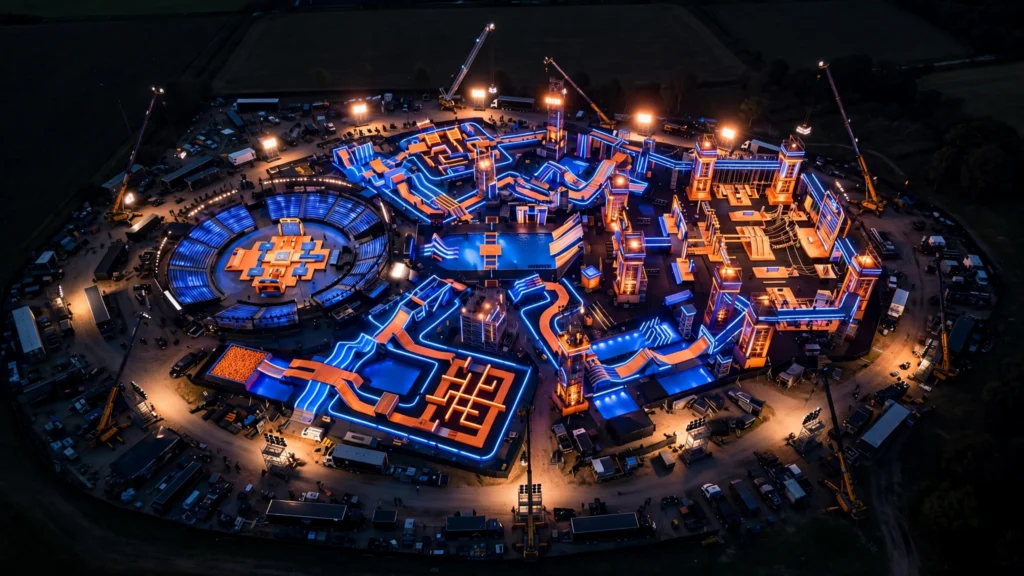
Once an idea is chosen, the challenge department and the art department turn it into something that can be built on location. The art department handles much of the physical look of the show, including challenge props and Tribal Council pieces. For a challenge, that means building structures that look dramatic on camera but can also take repeated use, first by testers and then by players. Dream Team members help with that building work too, painting and assembling challenge pieces in the art workshop. One current member described a typical day running 11 to 12 hours across set help, art work, test blocks, rehearsals, and Tribal Council preparation.
The filming location also shapes what can be built. Water challenges depend on safe, usable water at the location, and the marine department helps with water based construction and safety. For more on that side of production, see where Survivor is filmed.
The Testing Process, Step by Step
Testing is not a single run through a course. According to multiple behind the scenes accounts, a challenge is normally run at least twice by the Dream Team before the players see it, and a former Dream Teamer has described a fuller sequence that also includes camera rehearsal and helicopter shots. The routine can vary by challenge and season, so the steps below are the reported pattern, not a rigid rule for every challenge.
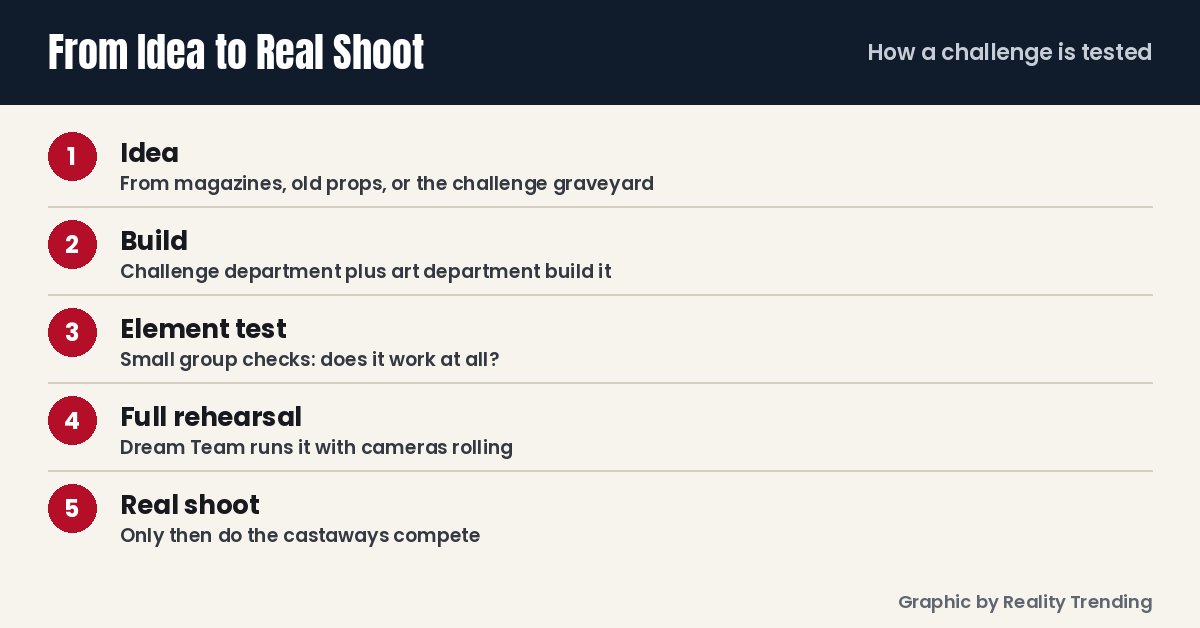
First comes a blocking or element test. A smaller group tries out the challenge elements without full camera coverage, while challenge producers watch. The question is simple: does it work at all? Does anything jam, collapse, tip too easily, or give one approach an unfair advantage?
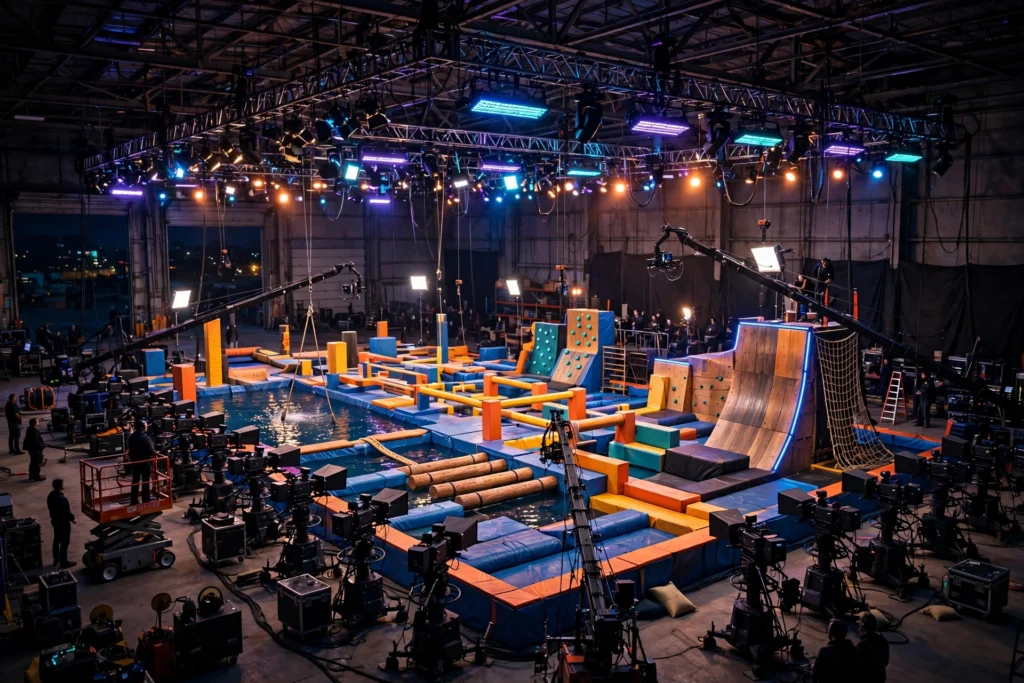
Next comes a fuller rehearsal, with cameras, lighting, and other departments present. The Dream Team runs the challenge as if they were contestants, and the camera crew practices its coverage. Producers then watch the playback and decide what needs to change. This rehearsal footage is also useful for Probst, because it shows him how the challenge plays in real time before he explains it to the castaways. After the rehearsal, the challenge is adjusted: a rule may change, a piece may move, a structure may be tightened, or a puzzle step that was too easy, too hard, or open to a shortcut may be rethought.
Only then comes the real shoot. Even then, the Dream Team’s work may not be finished: members are sometimes used as stand-ins for wide helicopter shots filmed after the competition, so aerial footage can show the course without cameras and crew in frame.
What Testers Are Actually Looking For
Safety comes first. A challenge must be difficult without being unreasonably dangerous, and testers are the first people to discover a sharp edge, an unstable platform, or a fall that lands badly. Medical staff are part of the wider production, and contestants are checked before and after challenges, but the Dream Team’s runs are an earlier safety filter.
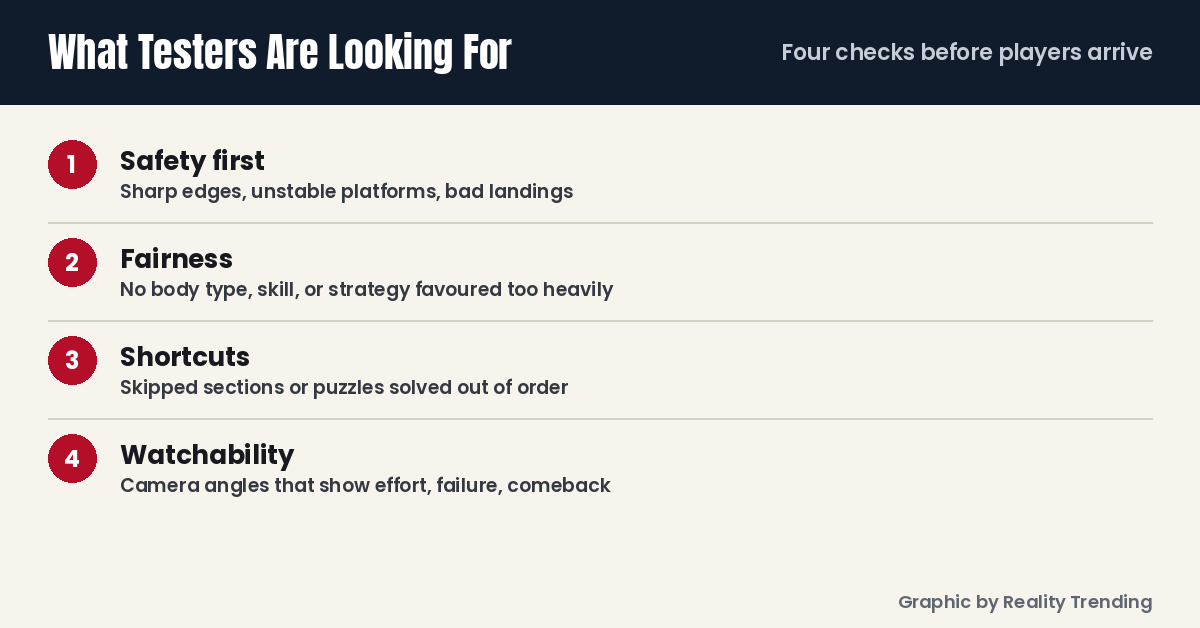
Fairness comes next. Testers help producers see whether the challenge favours one body type, one skill, or one strategy too heavily, and whether the rules are clear enough for every tribe or player to understand in the same way. Then there is the search for shortcuts and loopholes. If testers find a way to skip a section or solve a puzzle out of order, producers can close that gap before it decides a real game. Finally, there is watchability. Camera blocking during rehearsals helps producers find the angles that show effort, failure, and comeback clearly. The goal, as Marchand has put it, is to give players every opportunity to look like stars.
The Main Challenge Types, and What Each One Tests
No single type of player should win every week, so a season needs a mix of challenge types. Many modern challenges also combine types, often following a run, swim, and solve pattern: a physical section first, then a puzzle finish. That structure stops the strongest physical team from winning every time, because a team that arrives first can still lose at the puzzle table.
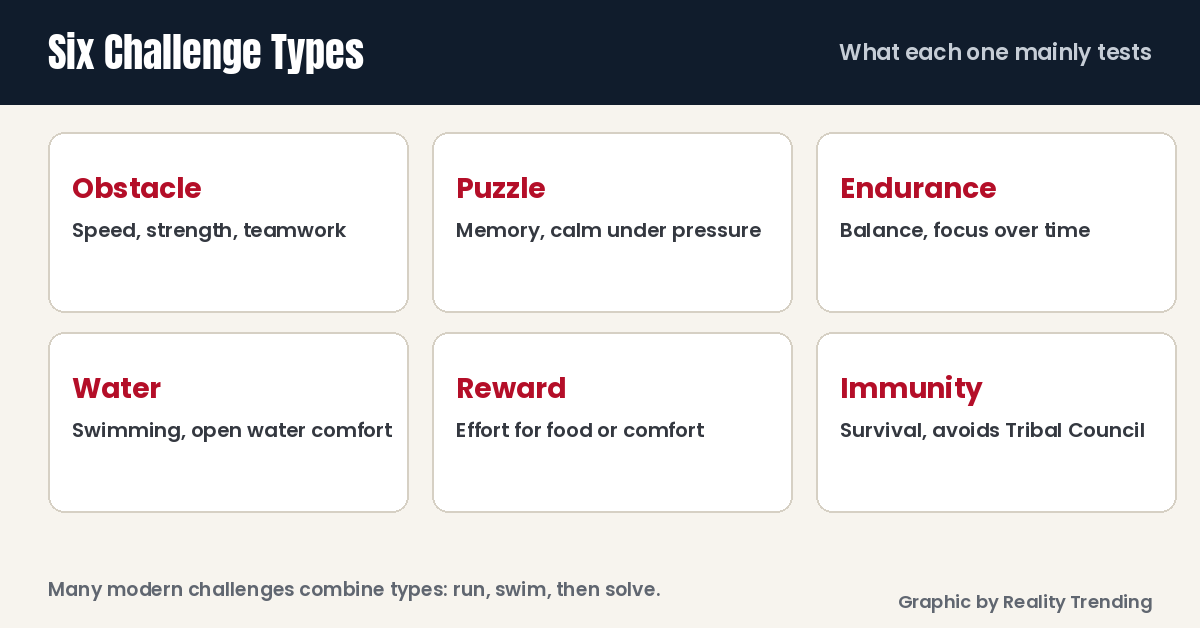
| Challenge type | What it mainly tests | What testing must catch |
|---|---|---|
| Obstacle course | Speed, strength, coordination, teamwork | Unsafe landings, bottlenecks, skippable sections |
| Puzzle finish | Memory, spatial reasoning, calm under pressure | Unsolvable, too easy, or luck based puzzles |
| Endurance | Balance, focus, and tolerance over time | Unsafe positions and unintended ways to rest |
| Water challenge | Swimming and comfort in open water | Unsafe water, unclear boundaries, unfair distances |
| Reward challenge | Effort for food, comfort, or an advantage | A reward too weak to matter, or a random result |
| Immunity challenge | Survival, since the winner avoids Tribal Council | Any unfair edge, because elimination is at stake |
| Combined challenge | Both reward and survival in one contest | One prize overshadowing the other, or a sit out loophole |
What Happens on Shoot Day
By shoot day, the players have not yet seen the finished challenge, but they are not thrown into it cold either. Probst first explains the challenge on camera, in the version viewers see. After that, Probst and Kirhoffer walk each tribe through the course separately, answering questions and letting players plan who does what. A representative from CBS standards and practices, or the show’s legal team, is present to make sure each tribe receives the same basic information, so the contest stays fair.
That walkthrough explains why players often look more confident than the short television explanation would suggest. They have had a chance to ask questions, check the course, and plan, and it can also force a ruling on the spot. For the wider filming schedule, see how long Survivor is filmed.
Why Players Still Surprise the Producers
Testing can only go so far. Dream Teamers give full effort, but they are not the actual players, and they do not carry the same hunger, exhaustion, alliances, and fear of elimination into the course. Probst has said that even after testing, sometimes the only way to know whether a changed challenge works is to put it in the game and watch what the players actually do. A twist that looks harder on paper can turn out easier in real play, and a changed classic can turn out worse than the original, in which case the show may go back to the original version.
Players also approach challenges differently from testers. A tester is trying to complete the course, while a player might also be protecting an ally, hiding a weakness, or saving energy for Tribal Council politics. Those motives cannot be fully rehearsed, and they are part of why Survivor remains unpredictable after 50 seasons.
FAQ
Who are the Survivor Dream Team?
The Survivor Dream Team is a group of young production assistants and junior crew members who test Survivor challenges before the contestants compete in them. They also help with building, painting, and camera setup.
How many people are on the Dream Team?
Reports vary by season and source, with figures commonly ranging from about a dozen people to roughly 16 to 20 people. Survivor has not published a single fixed roster size.
Do Dream Team members play the challenge before the contestants?
Yes. They run through challenges at least twice in most accounts, first to check that the challenge works, and then in a fuller rehearsal that lets the camera crew practice coverage. Producers watch the runs, adjust the rules or the course if needed, and only then bring in the contestants.
Who designs Survivor challenges?
The challenge department, led by challenge producer John Kirhoffer, designs the challenges, working with the art department to build the structures and props. Host and showrunner Jeff Probst is also closely involved in challenge decisions, including how rules and twists are explained to players.
Can Dream Team members become Survivor contestants later?
The Dream Team is a crew role, not a path to playing the game, and reporting about the team focuses on its production work and its role as a training ground for television jobs. The show does not present Dream Team membership as a casting shortcut.
Why do challenges still go wrong if they are tested?
Testing finds many problems, but it cannot copy the exact hunger, exhaustion, strategy, and pressure of real players. Probst has said that sometimes only real gameplay shows whether a changed challenge works, and in those cases the show may return to the original version.